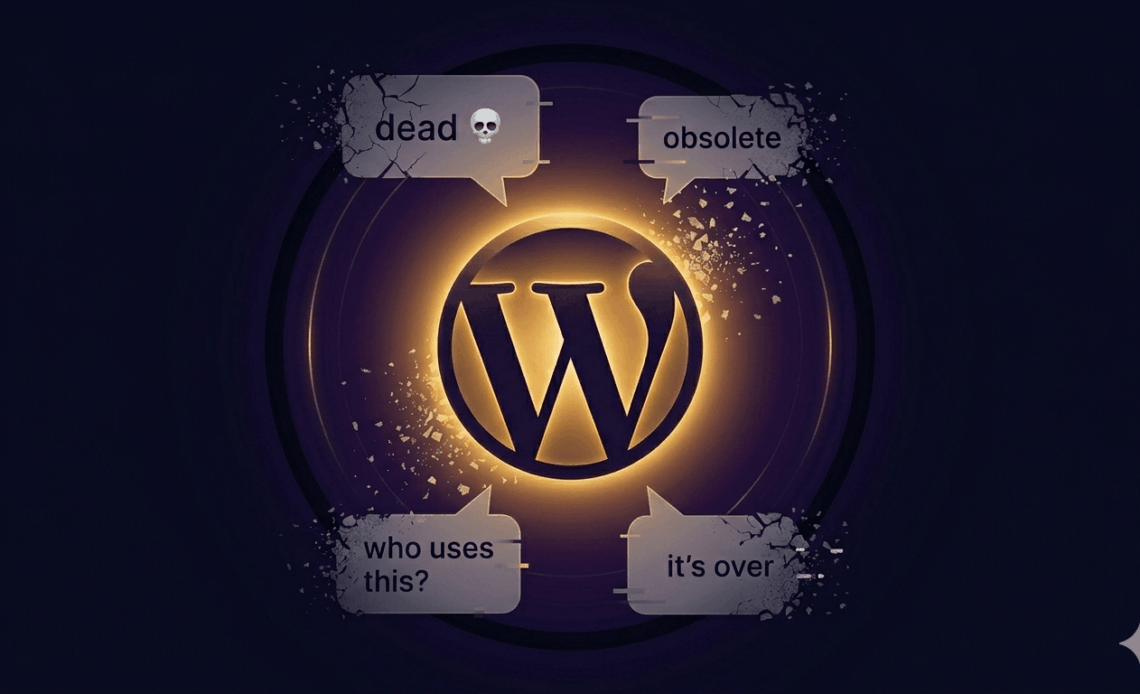
So, is WordPress dead? Last week, I posted a TikTok about WordPress and AI that hit 60k views. Within hours, the comments section turned into a battlefield:
“WordPress is dead”
“Using WordPress in 2026 💀”
“WordPress will be obsolete in a year”
“Who in their right mind would use WordPress?”
“WordPress has become completely obsolete since Claude Code.”
“I hate WordPress 😭”
Not boring. Not outdated. Dead. According to these people, WordPress is dead and buried. Done. A relic that nobody in their right mind should touch in 2026.
Here’s my response: absolute rubbish.
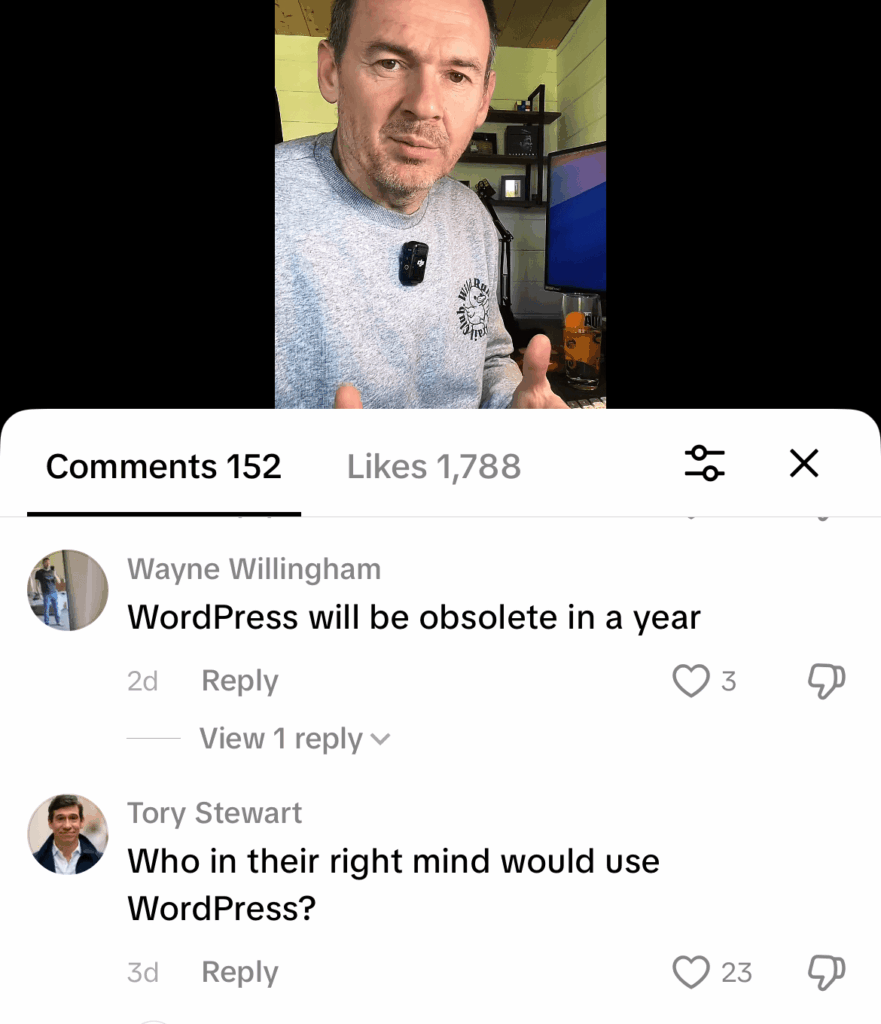
Table of Contents
Let’s Start With the Facts
WordPress powers 43% of the entire internet. Not 43% of websites built with a CMS (that’s closed to 65%), 43% of the whole internet. And according to BuiltWith, that number is still growing, not shrinking.
That’s not a dying platform. That’s the most dominant content management system ever created, and it’s still expanding.
Saying “WordPress is dead” is like saying cutting hair is dead because electric razors exist. People still need haircuts. Businesses still need websites. And the vast majority of them run on WordPress.
So is WordPress dead? No. Not even close.
But Is It Boring? Yeah, Actually. And That’s the Point.
Now here’s the thing – those commenters weren’t entirely wrong about everything. WordPress IS boring. I’ll give them that.
Your plumbing is boring. Your electricity is boring. Your internet connection is boring.
Nobody wakes up excited about their copper pipes or their fibre broadband. Nobody brags at dinner parties about their electrical wiring or their boring old boiler that just… works.
But nobody complains when their plumber sorts out a leak, either. And nobody asks is plumbing dead. They don’t care that the solution is “boring” – they care that it bloody works.
WordPress is the plumbing of the internet. And just like plumbing, the magic isn’t in the pipes themselves – it’s in what flows through them.
The Wrong Question Everyone’s Asking
If you’re still wondering is WordPress dead, those TikTok commenters are asking the wrong question entirely.
They’re asking: “What should I build a website with?”
I’m asking: “What should I build a BUSINESS around?”
Completely different game.
While everyone’s chasing the latest shiny framework or debating headless vs traditional, I’ve been quietly building something that actually matters: recurring income.
Here’s what “boring” WordPress has given me:
- A growing client base
- 100+ WordPress sites under management
- Predictable, recurring revenue every single month
- A business that runs largely without me
Not because WordPress is exciting. Because it’s reliable, scalable, and my clients’ businesses depend on it.
Is WordPress Dead in 2026?
The “WordPress is dead” crowd love to point to new frameworks, headless solutions, and whatever the latest JavaScript flavour of the month is.
Meanwhile, WordPress is still growing. In 2026.
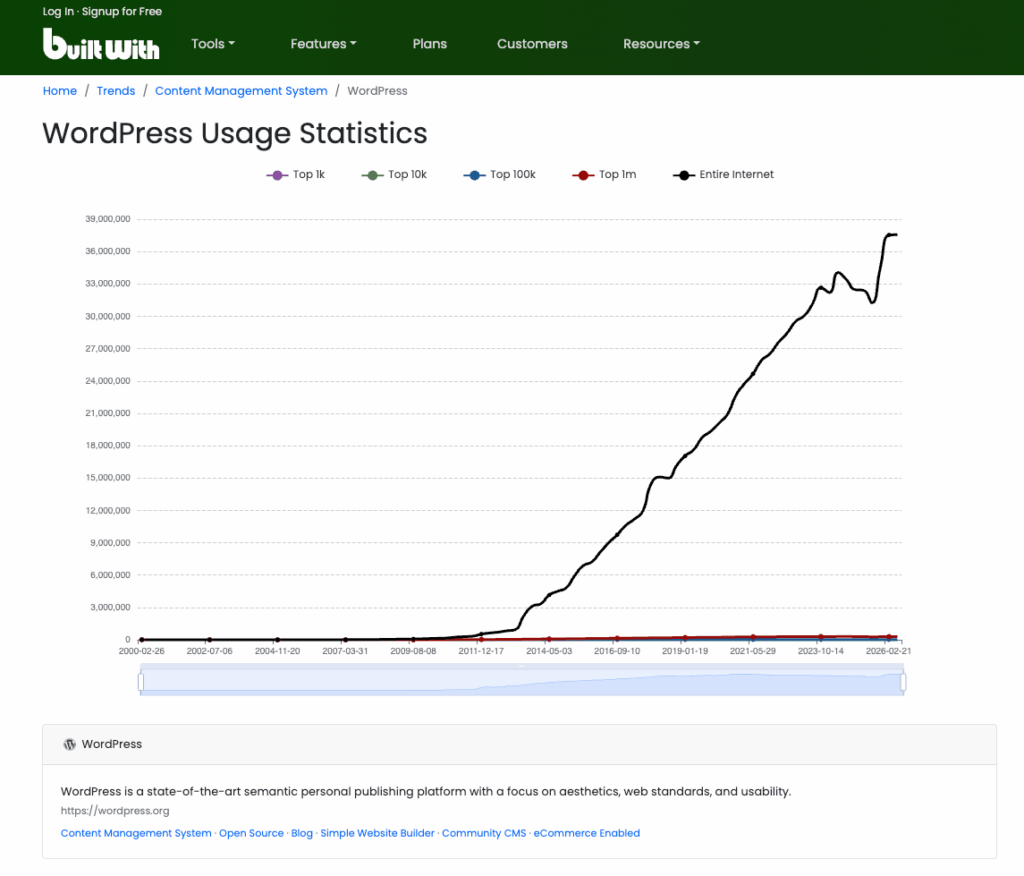
That’s not a shrinking market, that’s an enormous opportunity that most people are too busy chasing trends to notice.
But here’s the kicker: WordPress isn’t just the foundation of my business. It’s the foundation my clients use to run theirs.
Every one of those 100+ sites isn’t just a website, it’s a business asset. It’s their SEO engine. Their content platform. Their lead generation machine. Their customer communication hub.
When someone says “WordPress is dead,” what they’re really saying is they don’t understand the difference between technology and business value.
What Actually Sits on Top of WordPress
Here’s where the “is WordPress dead” argument completely falls apart. The commenters saying WordPress is outdated are thinking about it like it’s 2015.
They’re not seeing what I’ve built on top of that “boring” foundation:
AI-powered operations that handle client communications, content suggestions, and technical monitoring. With AI coming to WordPress core, this is only going to accelerate. While they’re manually managing their fancy headless builds, my AI is automatically detecting issues and often fixing them before clients even know they existed.
Automated client management through my CRM (Go High Level) that’s completely integrated with every WordPress site. Lead capture, client onboarding, project management, billing, all automated.
Intelligent monitoring and maintenance that keeps 100+ sites running smoothly without me having to manually check each one. Security, backups, performance optimization – handled automatically.
Content and SEO automation that helps clients publish, optimise their SEO, and scale their content without needing a content team.
WordPress isn’t the product. It’s the platform that everything else is built on.
Why “Boring” Wins in Business
The difference between a developer and a business owner is simple:
Developers chase exciting technology.
Business owners chase reliable profit.
I’ve watched countless agencies pivot to the latest framework, rebuild their entire stack, retrain their team, and lose months of productivity, all to solve problems that didn’t actually exist.
Meanwhile, I’ve been steadily growing a business on “boring” WordPress that generates consistent revenue and actually solves real problems for real businesses.
Your clients don’t care what CMS you use. They care that their website works, ranks well, converts visitors, and doesn’t break. WordPress delivers all of that, reliably, at scale.
What My Clients Actually Get
When I take on a new client, they’re not buying WordPress. They’re buying a complete digital business platform. If you think WordPress is dead, someone forgot to tell my clients:
Their biggest digital asset: A website they own completely, with no platform dependency or monthly hosting fees to some SaaS that could disappear tomorrow.
An SEO powerhouse: WordPress’s SEO capabilities are unmatched. My clients rank, they get traffic, they convert that traffic into customers.
A content engine: Easy publishing, media management, and content workflows that don’t require a developer every time they want to add a blog post.
Business automation: Integration with their CRM, email marketing, analytics, and whatever other tools their business depends on.
Future-proof foundation: When new technology comes along (like AI), it integrates with WordPress. When new requirements emerge, WordPress adapts.
The “cutting-edge” alternatives? Half of them won’t exist in three years. The ones that do will require complete rebuilds every time the framework updates.
WordPress sites I built five years ago are still running perfectly today. Tell me again how WordPress is dead?
Why I’m Doubling Down in 2026
While the “WordPress is dead” crowd chase the next shiny thing, I’m doubling down on WordPress. Not because I’m stuck in the past, but because I understand the future.
The future isn’t about having the most exciting tech stack. It’s about having the most reliable, scalable, profitable business model.
WordPress gives me that foundation. Everything else I build on top of it, the AI, the automation, the systems, that’s where the real innovation happens.
My competitors can keep rebuilding their businesses every time a new framework launches. They can keep asking is WordPress dead while I keep growing. I’ll keep growing mine on the rock-solid foundation that already powers nearly half the internet.
The Bottom Line
Is WordPress dead in 2026?
Not even close.
But is it boring? I used to think so. I even leaned into it – boring pays the bills, boring scales, boring is reliable.
Then I watched a guy in my community use AI to build 9 complete WordPress websites in two weeks. Another used programmatic SEO on WordPress to get his client found by every major AI – Gemini, ChatGPT, Claude, Grok – without a single special plugin. Four leads in two weeks from a site that was getting nothing.
That’s not boring. That’s the cutting edge, built on top of a platform that’s been quietly powering the internet for 20 years.
WordPress isn’t exciting because of what it is. It’s exciting because of what you can do with it – APIs, webhooks, AI, automation, CRM integrations. The people calling it dead are looking at the foundation and missing the skyscraper being built on top of it.
I’ve built a profitable, scalable business on this platform. My clients own their digital assets, rank in search, and run their businesses without depending on me for every tiny change.
And I’m only just getting started. Because the more I learn what WordPress can really do, the more I realise we’re not at the end of this story. We’re at the beginning.
Ready to join other WordPress business owners who’ve stopped chasing trends and started building wealth? Find out why WP Odyssey exists and join our free community where we share real strategies for building profitable WordPress businesses. Join here — no fluff, no trends, just proven business building methods.